

Ear Stretching Aftercare: The Complete Guide to Healthy Stretched Ears
Getting your ear stretching right doesn’t end when the taper comes out. What you do in the hours, days, and weeks that follow makes the difference between healthy, elastic lobes and scarring, blowouts, and infections that can set you back months.
The good news? Healthy stretched ears don’t require a complicated routine. Consistency matters more than complexity. A simple daily care routine — done correctly and patiently — is enough to keep your lobes healthy throughout your entire stretching journey.
In this guide, you’ll learn how to care for ear gauges after a fresh stretch, what to expect during healing, how to clean different ear plug materials, and what to do if irritation or other problems appear.
The First 48 Hours: Immediate Aftercare After a Fresh Stretch
The window immediately after a stretch is when your lobes are most vulnerable. The tissue has just been expanded, blood flow is increased, and the skin needs time and support to adapt to its new size. Here’s what to do — and what to avoid — in those crucial first two days.
Saline Soaks
Twice a day, for the first week or two after each new stretch, do a saline soak on each ear. Here’s how:
1. Fill a small cup or shot glass with sterile saline solution. You can buy saline wound wash at most pharmacies. You can also make your own by mixing 1/4 teaspoon of non-iodized sea salt with 1 cup of warm distilled water.
2. Tilt your head and press the cup over your ear, forming a seal.
3. Hold it in place for 5 minutes, then rinse gently with clean water and pat dry.
Do this twice daily — morning and before bed works well for most people. After the initial healing settles (usually 1–2 weeks), you can drop to once a day.
One important note: use sterile saline, not homemade salt water if you can help it. Homemade saline solutions can be difficult to measure correctly. Too much salt may dry out the skin and irritate healing tissue.
What NOT to Do in the First 48 Hours
Just as important as what you do is what you don’t do. Avoid all of the following immediately after a fresh stretch:
· Alcohol or hydrogen peroxide. These are far too harsh for healing tissue — they kill healthy cells along with bacteria and dramatically slow the healing process.
· Rotating or twisting your plugs. This is an outdated aftercare myth borrowed from standard piercing care. It disrupts healing tissue, introduces bacteria from your fingers, and causes unnecessary irritation. Leave your plugs alone.
· Swimming. Pools, lakes, hot tubs, and the ocean are all off-limits for at least the first two weeks after a stretch. The bacteria count in public water is too high for fresh tissue.
· Heavy jewelry. Weighted earrings or heavy tunnels put downward pressure on lobes that are still adjusting. Save those for fully healed stretches.
· Touching your ears with unwashed hands. It sounds obvious, but it’s the most common cause of infection. Always wash your hands before handling your plugs or touching your lobes.
Normal Healing vs. Warning Signs
After a fresh stretch, a certain amount of reaction is completely normal. Here’s how to tell the difference between healthy healing and a problem developing:
Normal:
· Mild redness and slight warmth around the piercing
· Minor swelling that resolves within 24–48 hours
· Small amount of clear or whitish discharge (lymph fluid)
· A sensation of pressure or mild tightness
See a doctor if you notice:
· Sharp, persistent pain that doesn’t ease after the first day
· Green or yellow discharge with an unpleasant smell
· Significant swelling that worsens after 48 hours
· Red streaking around the piercing (this can indicate infection spreading)
· A collar of skin pushed out behind your lobe (this is a blowout — more on this below)
When in doubt, downsize. Going back one size and giving your ear more healing time is never the wrong call.
The Daily Routine: Long-Term Maintenance for Stretched Ears
Once the initial healing period is over, aftercare shifts from basic wound care to maintaining healthy, elastic skin and tissue. This is the stage most people under-invest in — and the stage that determines how good your lobes look and feel long-term.
Daily Oil Massage — The Single Most Important Habit
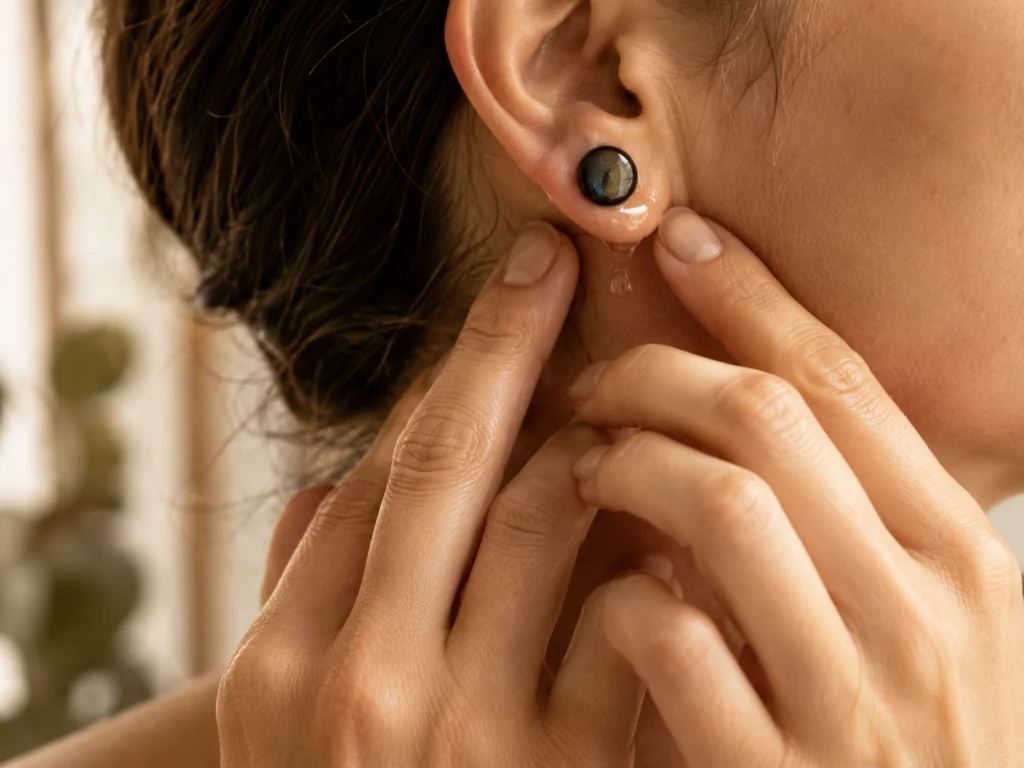
If you take nothing else from this guide, take this: massage your earlobes with oil every single day.
Oil massage is the most effective thing you can do for long-term lobe health. It helps break down scar tissue over time. It keeps the skin soft and moisturized. It also improves elasticity, which is important when stretching to larger sizes. Better blood flow helps keep the tissue healthy.
The best time to do it is right after a hot shower. Warm water opens your pores and softens the skin, allowing the oil to absorb more effectively.
Here’s the routine:
1. Remove your plugs.
2. Apply 2–3 drops of oil to your fingertips and your earlobes.
3. Massage the area gently for 3–5 minutes. Use slow circular motions and moderate pressure. Cover the entire earlobe, including the piercing channel.
4. Wipe away any excess, then reinsert clean plugs.
Do this daily. It takes five minutes and makes a genuine difference.
Best Oils for Ear Stretching Aftercare
Not all oils are equal when it comes to ear aftercare. Here are the best options, ranked by how well they work and how easy they are to find:
Jojoba Oil — Top Pick Jojoba is the gold standard for ear stretching aftercare. Its structure is very similar to the skin’s natural oils. Because of this, it absorbs easily, does not clog pores, and works well for most skin types. It’s also shelf-stable and won’t go rancid quickly. A small bottle lasts months.
Vitamin E Oil — Best Budget Option. Easy to find at most pharmacies. It helps improve skin elasticity and supports healing. You can also buy vitamin E capsules. Pierce one before use. This gives a fresh, precisely measured amount of oil each time. It is slightly thicker than jojoba oil. Some people prefer it for massage because of this texture.
Coconut Oil — Good for Larger Sizes ear gauge. Coconut oil is moisturizing. It also has mild antibacterial properties. But it is heavier than jojoba oil or vitamin E. It is more occlusive as well. It works well for larger ear gauge sizes. These sizes often need deeper moisture. On smaller stretches, it can feel greasy.
Dedicated Ear Stretching Balms Brands like LobeLove make special balms for stretched ears. These are designed specifically for ear stretching care. They often combine jojoba oil, beeswax, and other skin-friendly ingredients. They usually cost more than a bottle of jojoba oil. But they are convenient. And they are effective for daily care.Worth trying if you want an all-in-one product.
Taking Your Plugs Out
Give your ears a break from jewelry for at least an hour or two each day if you can. This allows the skin to breathe. It reduces the buildup of dead skin cells and sebum. Sebum is what causes that “ear cheese” smell — more on that later. It also keeps your lobes more comfortable in the long term. At larger sizes (00g and above), consider removing your plugs before sleep. The weight and pressure of larger plugs over long hours can cause gradual stress on the tissue, particularly if you sleep on your side. A travel pillow with a hole cut out is a popular solution if you prefer to keep them in.
How to Care for Different Ear Plug Materials
This is where most aftercare guides fall short. Not all ear plugs are cleaned the same way. Using the wrong method for the material can cause problems. It can damage your jewelry. It can also irritate your ears. In some cases, it can even introduce bacteria into healing tissue.
Natural Stone Ear Plugs
Natural stone ear plugs include obsidian, labradorite, tiger’s eye, and African turquoise. These stones are non-porous. This makes them one of the most hygienic choices for stretched ears. Bacteria cannot enter the surface. This is different from porous materials like wood, where bacteria can get inside more easily.
How to clean:
· Wash with warm water and a small amount of mild, fragrance-free soap.
· Rinse thoroughly and dry completely before reinserting.
· Do not soak stone plugs for long periods. Stone is non-porous. That is true. But long soaking can still affect the polish. It can also wear down the surface finish over time.
· Avoid chemical cleaners, alcohol, and essential oils, which can dull the surface.
For maintenance:
· Buff occasionally with a soft dry cloth to restore shine.
· A tiny amount of jojoba oil wiped over the surface can help maintain the polish on smoother stones.
Because stone is non-porous and easy to keep clean, it’s one of the best materials to use once your ears have fully healed at a given size.
Wood Ear Plugs
Wood ear plugs are loved for their lightweight feel. They also have a natural, organic look. This is especially important at larger sizes. Stone or steel plugs can feel heavy at that scale. However, wood is a porous material, which means it requires more careful handling.
How to clean:
· Never soak wood plugs in water. Soaking causes the wood to absorb moisture, swell, and eventually crack or warp.
· Wipe clean with a lightly damp cloth, then dry immediately and thoroughly.
· Do not use alcohol or harsh cleaning agents — these strip the natural oils from the wood and cause cracking.
For maintenance:
· Condition your wood plugs regularly with a small amount of jojoba or coconut oil. Apply a thin layer, let it absorb for a few minutes, then wipe away the excess.
· This prevents the wood from drying out and cracking, and extends the life of the plug significantly.
Important: Because wood is porous, it’s not recommended for use during active healing phases. Reserve your wood plugs for fully healed, stable lobes.
Resin Ear Plugs
Resin ear plugs are lightweight, colorful, and easy to maintain — a great choice for everyday wear, particularly at larger sizes.
How to clean:
· Wash with warm water and mild soap. Resin is non-porous and cleans up easily.
· Rinse and dry thoroughly before reinserting.
· Avoid strong solvents or acetone-based products. For example, nail polish remover. These can damage the resin surface. They may also make it look cloudy over time.
· Keep away from prolonged heat exposure. Resin can soften or warp at high temperatures, so don’t leave your plugs in direct sunlight or a hot car.
Glass and Surgical Steel Plugs
Glass and surgical steel are the easiest materials to sterilize. They are also the safest options during active healing. You can also use them any time your lobes are irritated.
How to clean:
· Wash with warm water and mild soap, or wipe down with an alcohol wipe and allow to dry fully before reinserting.
· Glass and steel can also be sterilized by boiling for a few minutes if needed.
· Both materials are non-porous, smooth-surfaced, and virtually maintenance-free.
Dealing with Common Problems
How to Treat a Blowout
A blowout happens when you stretch too fast or with too much force, causing the inner lining of your piercing to be pushed outward. It appears as a collar or ring of tissue behind your earlobe, sometimes red and irritated.
If you notice a blowout:
1. Downsize immediately — go back to the previous, smaller size.
2. Continue your regular aftercare — saline soaks and oil massage.
3. Do not attempt to push the tissue back — let it heal naturally.
4. Wait longer before your next stretch — at least 3–4 months.
Most blowouts heal significantly with time and proper care, especially if caught early. The sooner you downsize, the better the outcome.
Why Do My Gauges Smell? (“Ear Cheese”)
If you’ve noticed an unpleasant smell coming from your stretched ears, you’re not alone — and it’s not a sign of infection. What you’re experiencing is commonly called “ear cheese.” It is a buildup of dead skin cells and sebum. Sebum is your skin’s natural oil. This buildup happens inside the piercing channel.
It’s more common with porous materials (wood, acrylic) but can happen with any plug type if you’re not cleaning regularly.
How to fix it:
· Remove your plugs daily and wash both your ears and the jewelry with mild soap and water.
· Give your lobes time without jewelry each day to allow the skin to breathe and shed naturally.
· Switch to non-porous materials (stone, glass, steel) if the problem persists.
· Include the piercing channel in your daily cleaning. Use a clean cotton swab. Lightly moisten it with saline. Gently insert it into the channel. Remove any buildup carefully.
Signs of Infection
Infection in stretched ears is relatively uncommon when aftercare is followed correctly, but it can happen. Signs to watch for include:
· Persistent pain (beyond 48 hours after a stretch)
· Green or yellow discharge
· Significant swelling that worsens over time
· Heat radiating from the area
· Red streaking around the piercing
If you suspect an infection, see a doctor. Do not attempt to treat it with alcohol or peroxide, which cause more harm than good. A medical professional may prescribe topical or oral antibiotics depending on the severity.
Itchy Stretched Ears
Itchiness is usually caused by one of three things: a reaction to your plug material (acrylic is a common culprit), dry skin around the piercing, or residue from cleaning products.
Try switching to glass or stone plugs if you’re currently using acrylic. Increase your daily oil massage to help with dryness. And make sure you’re rinsing away all soap residue after cleaning — leftover soap is a surprisingly common cause of irritation.
Aftercare by Stage: Quick Reference
| Stage | Timeframe | Key Actions |
|---|---|---|
| Fresh stretch | 0–48 hours | Saline soaks 2x/day · No swimming · No rotation · No alcohol |
| Active healing | 1–8 weeks | Saline soaks 1x/day · Daily oil massage · Monitor for problems |
| Stable & healed | 8+ weeks | Daily oil massage · Regular plug cleaning · Take plugs out for rest · Condition wood plugs |
Frequently Asked Questions
During an active healing phase (the weeks after a fresh stretch), clean once or twice daily with saline solution. Once fully healed, a thorough clean with mild soap and water during your daily shower — plus daily oil massage — is sufficient.
es, coconut oil works well, particularly at larger sizes. It’s more occlusive (heavier) than jojoba oil, so it’s better suited to dry lobes that need intensive moisture. For smaller sizes or oilier skin types, jojoba oil absorbs more cleanly.
For smaller sizes (up to 0g/8mm), it’s optional. For larger sizes (00g and above), removing your plugs before sleep is generally a good idea — it relieves constant pressure on the tissue and gives your lobes time to rest. If you prefer to keep them in, a travel pillow can reduce side-sleeping pressure.
Full healing between stretches typically takes 2–6 months, depending on your size, your body’s natural healing rate, and how consistent your aftercare has been. A useful test: your current plugs should feel completely loose and comfortable, with no tightness, before you move up.
Jojoba oil is the most widely recommended option — it absorbs easily, closely mimics the skin’s natural sebum, and suits most skin types. Vitamin E oil is a close second and is easier to find in some locations. Both outperform coconut oil for everyday use, though coconut oil is a good option for larger stretched lobes that need more intensive hydration.
Ready to Upgrade Your Plugs?
Well-maintained, fully healed lobes deserve well-made jewelry. Our collection of natural stone ear plugs — including obsidian, labradorite, African turquoise, and rare dinosaur bone fossil — are non-porous, smooth-finished, and genuinely easy to keep clean. We also carry lightweight wood ear plugs for larger sizes and bold resin ear plugs for those who love colour.
All plugs are available in sizes from 6mm (2G) to 32mm, sold in pairs.
Questions about sizing? Our ear gauge size chart converts gauge numbers to millimeters so you can shop with confidence. New to stretching? Start with our complete guide on how to stretch ears safely.