

Are Stone Ear Plugs Safe? Everything You Need to Know Before Buying
Yes — natural stone ear plugs are safe to wear. But there are two important conditions. First, your ears must be fully healed. Second, the stone should be smooth, well-finished, and free from coatings, cracks, or surface flaws.
Get those two things right, and natural stone is one of the best materials you can wear in stretched ears. Stone is non-porous, hypoallergenic, and easy to clean. It also looks beautiful. Every piece has its own natural pattern, so no two are exactly the same. Synthetic materials cannot fully copy that.
This guide explains why stone is considered safe for stretched ears. You’ll also learn what to look for before buying, which stone types work best, and how to wear them for long-term comfort.
Why Stone Is Considered a Safe Plug Material
Before we talk about the conditions and risks, it helps to understand why natural stone is considered a body-safe material in the first place. There are three core reasons.
Non-Porous Surface
Unlike wood, acrylic, or silicone, most natural stones used in body jewelry have a dense, non-porous surface. This includes stones like obsidian, agate, labradorite, and tiger’s eye. This means bacteria cannot penetrate into the material itself. When you clean a stone plug with mild soap and water, you’re cleaning the entire surface rather than just the outer layer.
This is a meaningful distinction. Porous materials like wood or untreated bone can trap bacteria, even after cleaning the surface. That’s why they are not recommended for healing ears. Stone doesn’t have this problem. The bacteria that naturally accumulate on any jewelry worn in stretched ears sit on the surface and wash off cleanly.
Hypoallergenic Properties
Natural stone is extremely unlikely to trigger an allergic reaction. For people who react to certain metals — nickel allergies being the most common — stone plugs are an excellent alternative. The minerals in most gemstone body jewelry are chemically stable.They usually do not react with your skin or trigger the immune system like some reactive metals can.
Adverse reactions to stone plugs can happen. But they are rare. When they do occur, it is usually due to one of three reasons. First, a coating or dye on the stone. Second, cracks or small pits that trap bacteria. Third, using stone before the ears are fully healed. All of these are preventable, and none of them are inherent properties of stone itself.
Smooth, Comfortable Fit
A properly polished stone plug sits smoothly against your earlobe. There is no friction. No sharp edges. No pressure points.
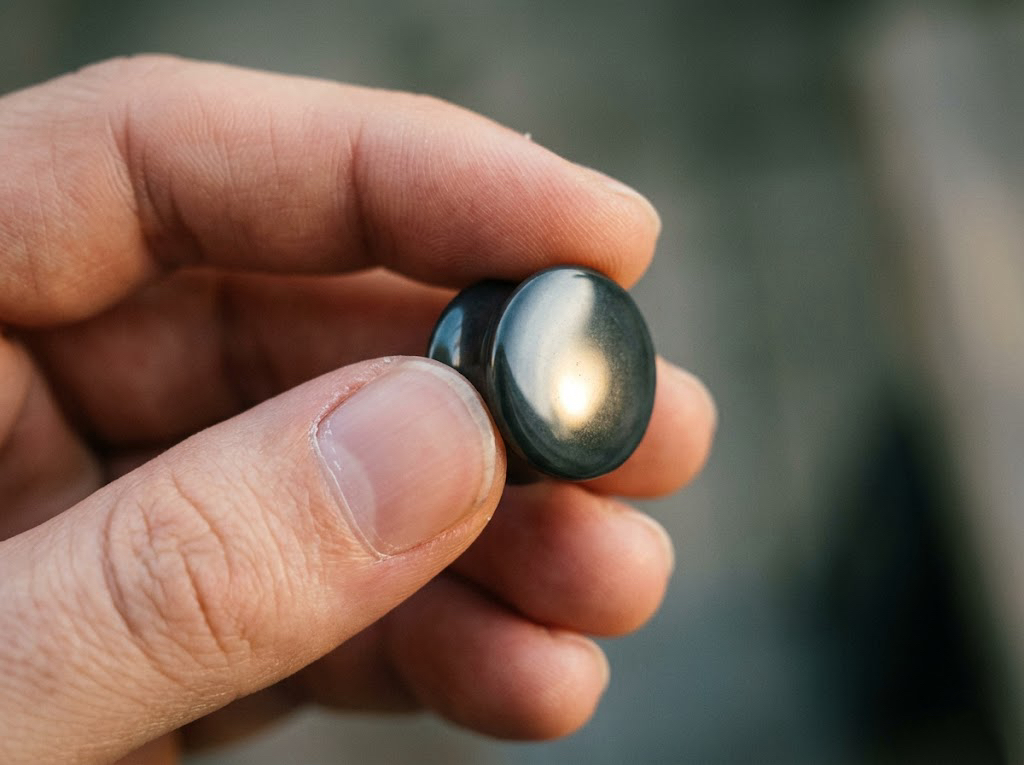
High-quality stone plugs are tumbled and hand-polished. This creates a smooth finish. It is comfortable for all-day wear.
When the finish is done right, stone feels solid and balanced. It has a natural weight. It also feels cool and smooth on the skin. Many people find this more comfortable than plastic or metal.
The Two Safety Rules You Must Follow
Stone is safe — but only when worn correctly. These two rules aren’t optional caveats. They’re the difference between a great experience and a painful one.
Rule 1: Only Wear Stone Plugs in Fully Healed Ears
This is the most important rule, and the most commonly broken one.
When you stretch your ears, the tissue needs time to heal. This process can take two to six months. It depends on your size, your body, and how well you care for it. During this healing time, the inside of the piercing is still open. It is sensitive. It can be easily irritated. It is also more vulnerable to bacteria.
Stone plugs are non-porous. But they cannot be fully sterilized to the level needed for healing tissue contact. Glass and surgical steel can be autoclaved or boiled. Stone cannot be subjected to those temperatures without cracking. This doesn’t make stone unsafe for healed ears — it just means the timing matters.
How do you know your ears are fully healed? Your current plugs should feel completely loose with no sensation of tightness. There should be no discharge, no tenderness when you touch the area, and no redness around the piercing channel. If all of those are true, you’re ready to wear stone.
If you’ve recently stretched and you’re in the healing phase, stick with glass or implant-grade steel until your ears tell you they’re ready. Then make the switch to stone. For more detail on the stretching and healing process, see our complete guide on how to stretch ears safely.
Rule 2: Quality of the Stone and Finish Matters
Not all stone plugs are created equal, and this is where a lot of buyers run into problems. A poorly finished stone plug can cause irritation. It may have tiny pits, small cracks, or a dye coating. These flaws can trap bacteria. A well-finished plug does not have this problem.
Here’s how to assess quality before you buy:
Check the surface finish. Run your fingernail slowly along the wearable area of the plug. You should feel absolutely nothing — no catches, no rough patches, no subtle texture. Then run your fingertip along the same area. The surface should feel as smooth as glass. Any imperfection you can detect by touch is a place where bacteria can accumulate and where skin irritation is more likely.
Look for signs of treatment or dyeing. Some lower-quality stone plugs are dyed to enhance their color. Dyes can leach into skin tissue over time, particularly in the warm, slightly moist environment of a stretched earlobe. Signs of dyeing include a few clear clues. The color may look too even or too strong. It may look unnatural. When wet, the color can rub off on a white cloth. Another warning sign is price. If the price is too low for that type of stone, be cautious.
Avoid cracked or chipped stones. Cracks in a stone plug are disqualifying, even if they look minor. A crack creates a surface irregularity that’s impossible to clean properly and can cause the plug to fail structurally. Buy from sellers who photograph their plugs in detail and stand behind the quality of individual pieces.
Buy from reputable sources. At Auralith Plug, every stone plug is individually inspected for surface integrity before it ships. We work directly with our factory to ensure the finish meets a standard we’d be comfortable wearing ourselves.
Stone vs. Other Plug Materials: How Does It Compare?
If you’re weighing stone against other options, here’s a straightforward comparison:
| Material | Porous? | Safe for Healing? | Allergy Risk | Easy to Clean? |
|---|---|---|---|---|
| Natural Stone | No | No | Very Low | Yes |
| Glass | No | Yes | Very Low | Yes |
| Surgical Steel | No | Yes | Low | Yes |
| Wood | Yes | No | Very Low | Moderate |
| Acrylic | Yes | No | Moderate | Difficult |
| Silicone | Slightly | No | Low–Moderate | Moderate |
Stone sits alongside glass and surgical steel as one of the safest materials for healed stretched ears. The key difference from glass is look and weight. Stone has more variety in appearance. It is also heavier and more solid in the hand. This gives it a strong, satisfying feel that glass cannot match. The key difference from wood is porosity. Stone is non-porous and easier to keep clean. This makes stone a better choice for people who want natural materials. It also avoids the extra care that wood needs.
Which Stone Types Are Safest for Ear Plugs?
Not every gemstone is equally suited to body jewelry. Here’s a look at the stone types we offer at Auralith Plug and why each one is a safe, reliable choice.
Black Obsidian
Obsidian is volcanic glass — one of the densest, most non-porous natural materials available. Its surface polishes to an extremely smooth finish. It also has no internal grain structure. This means it won’t easily develop micro-cracks over time. Black obsidian is one of the most trusted materials in the body jewelry community. It is also a strong choice for first-time stone wearers. Shop our obsidian ear plugs.
Labradorite
Labradorite is a feldspar mineral with a dense, stable crystal structure. Its color-shifting effect is called labradorescence. It is a structural property of the stone, not a surface treatment. This means the effect will not fade over time. It also will not leach anything into your skin. Labradorite polishes beautifully and wears comfortably at all gauge sizes. Shop our labradorite ear plugs.
Tiger’s Eye
Tiger’s eye has a fibrous internal structure. This structure creates its chatoyant shimmer. Once polished, the surface becomes smooth and fully sealed. It’s a hard stone that resists scratching and holds its finish well over time. Shop our tiger’s eye ear plugs.
Amethyst
Amethyst is a variety of quartz with a hardness of 7 on the Mohs scale — harder than most metals. It’s chemically stable, non-reactive, and polishes to a glassy finish. Its purple color is completely natural. Untreated amethyst gets its color from iron inside the crystal structure. It does not use dyes or surface coatings. Shop our amethyst ear plugs.
African Turquoise
Despite its name, African turquoise is actually a type of jasper. Jasper is a form of microcrystalline quartz. This gives it a dense, non-porous structure. That structure makes it safe for body jewelry use.Its blue-green matrix pattern is entirely natural. Shop our African turquoise ear plugs.
What About Weight? Are Heavy Stone Plugs Safe for Ears?
Weight is one of the most common concerns people raise about stone ear plugs, and it’s a reasonable one to think through.
At smaller gauge sizes — 14g through 00g (1.6mm to 10mm) — the weight of stone plugs is negligible. Even dense stones like obsidian are still light at these sizes. They usually weigh only a few grams. The difference compared to glass or steel is very small. Most people barely notice it during daily wear.
At larger sizes — 12mm and above — weight becomes a more meaningful consideration. Heavy plugs worn for a long time can put downward pressure on the earlobe. This stress builds up over time. It can slowly lead to thinning of the tissue. This isn’t an immediate safety concern, but it’s worth being mindful of if you’re wearing large stone plugs every day for years.
The practical solution: give your ears regular breaks. Remove your plugs for a few hours each day, and if you’re wearing large-gauge stone plugs daily, consider alternating with wood ear plugs on some days. Wood is significantly lighter than stone at larger sizes and gives your lobes a rest from the extra weight without sacrificing the natural, organic aesthetic.
Using heavy jewelry to deliberately stretch your ears is not recommended and is not what we’re describing here. Intentional weight-stretching causes uneven, distorted tissue development rather than clean, controlled stretching.
How to Wear Stone Ear Plugs Safely: Quick Checklist
Before and during wear, run through these points:
· Confirm full healing. Current plugs feel completely loose, no tenderness, no discharge.
· Inspect the surface. Fingernail test — no catches anywhere on the wearable area.
· Clean before inserting. Warm water and mild soap, rinse thoroughly, dry completely.
· Apply a small amount of oil. A drop of jojoba oil on the plug helps it seat comfortably and keeps your lobe moisturized.
· Take breaks. Remove plugs for at least an hour or two daily. At large sizes, consider removing before sleep.
· Massage daily. A few minutes of oil massage each day maintain lobe elasticity and prevent buildup.
For a full aftercare routine, see our ear stretching aftercare guide.
Frequently Asked Questions
In properly healed ears with regular cleaning, infections from stone plugs are rare. Stone’s non-porous surface doesn’t harbor bacteria the way porous materials do. Infections that do occur are almost always linked to wearing stone in ears that haven’t fully healed, or to inadequate cleaning. Follow the two rules above and maintain a regular cleaning routine, and infection risk is minimal.
Yes — natural stone is one of the best options for people with sensitive ears or metal allergies. The minerals in most gemstones used for body jewelry are chemically inert and extremely unlikely to trigger a reaction. If you’ve struggled with irritation from metal or acrylic plugs in the past, stone is worth trying. Browse our full stone ear plug collection to find a style that suits you.
At smaller sizes (up to around 0g / 8mm), sleeping with stone plugs in is generally fine as long as you’re comfortable. At larger sizes, the weight and pressure of the plug during side-sleeping can cause unnecessary stress on the lobe tissue over hours. A travel pillow with a cut-out can help if you prefer to keep them in, but removing them before sleep is the simpler solution.
Run your fingernail along the entire wearable surface — it should glide without catching anywhere. Press your fingertip along the same path — you should feel nothing but smooth, consistent surface. Hold the plug up to light and look for any cracks, chips, or dull patches. Color should look natural rather than artificially uniform. When in doubt, buy from a seller who photographs individual pieces and is transparent about their sourcing and finishing process.
Ready to Try Natural Stone Ear Plugs?
Natural stone is a safe, beautiful, and long-lasting choice for healed stretched ears. It works well for everyday wear. Our collection includes classic stones like obsidian and tiger’s eye. It also includes rare pieces like labradorite and dinosaur bone fossil.
Browse our full stone ear plug collection. Every piece is hand-polished. Each plug is individually inspected for quality. Sizes range from 6 mm (2G) to 32 mm. All items are sold in pairs.
Not sure what size you need? Our ear gauge size chart converts gauge numbers to millimeters so you can shop with confidence.